If you are weaving purely for fun with no care about the length of a finished project, terms like warp length, take-up and loom waste are all terms you don’t really need to know or understand. The same is true if you weave from patterns using the same fibre the designer has used.
However, if you are designing for a specific length, these terms matter! So let’s take a look at them.
When we weave, we put a length of warp on our loom. This is the warp length.
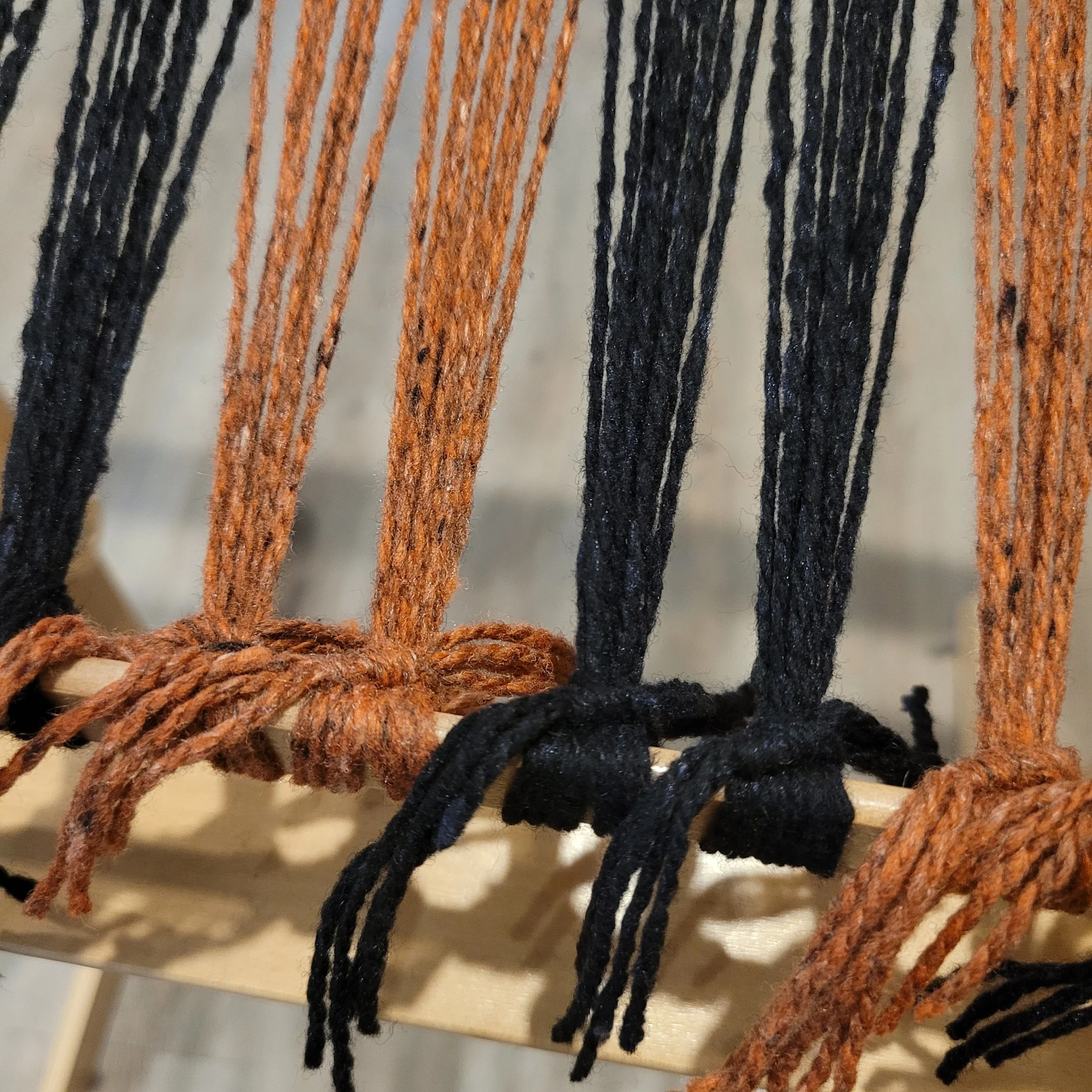
We know that whatever the warp length is, our woven length will be less. This is because we need to tie the warp to the front beam, and, we can’t weave any warp that is left behind the reed after all the warp has been woven and wound onto the front beam. This unwoven warp is called loom waste. Sometimes that waste is important for the fringe of a scarf: you might see in a pattern to “tie-onto the front beam leaving enough for an 8” fringe, or cut, leaving 8” for fringe.

Finally we have take-up. Our warp begins as a straight line. As we add weft, the warp moves over and under the weft, becoming wave shaped. While the project is on the loom and under tension, this isn’t very noticeable. However, once the project comes off the loom and the fibres bounce back to their relaxed state, suddenly the weaving is much shorter than expected!

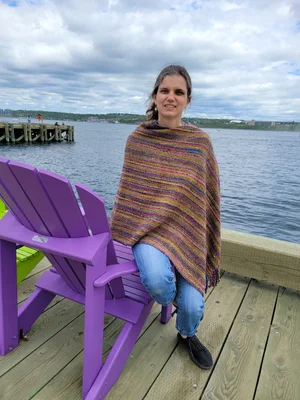
Let’s put this into practise. I just wove a wool scarf. The warp length was 90”. I used 7” to tie onto the front beam. I wove 75” and had 10” of warp left at the end left unwoven. This actually adds up to 92”, 2” more than my warp length! This is because as the yarn is under tension, it stretches. Let’s look at another project using cotton. I warped 104”. I used 9” to tie on, wove 84” and had 12” of unwoven warp at the end, adding up to 105”, 1” more than the warped length.
When I took the wool scarf off the loom, my total woven woven length was only 65”…a loss of 10”! When I took the table runner off the loom, the woven length was 77”, a loss of 7”. This is take-up. And it is important to know when you are designing! A general rule is to expect 5-10% take-up. Practically, this means add 5-10% extra warp length. But as I said, this is a general rule. My scarf had 13% take-up, while my table runner only had about 8% take up.
This is why sampling is important. Every fibre behaves differently. Additionally, how a fibre is constructed AND the weave structure will impact the take-up! A super-stretchy yarn is likely to have more take-up (like my scarf). More floats will add take-up as the weft can pack tighter, making more waves in the warp. Something that is gauzy, with a non-stretchy warp will have less take-up. Experience can help you predict what a fibre is likely to do, but only sampling will tell you for sure!
(Don’t forget: your project isn’t finished until it had been wet-finished…and there will be additional loss of length in this process too!)